My Ireland


Oops, no internet connection
While offline, you can still add items to ‘My Board’. New travel reccomendations will only show up once you’re back online.
Items without a physical location are not shown in map view.
Looks like your board is empty


Collection cover image
Visible to people you share your board with















Create an account?
Access My Ireland across all of your devices by logging in.
Location access
- View offers and deals nearby you
- Get travel inspiration based on your location
- Local weather warnings and useful travel information








Travel times
Tell us when you are going to be travelling Ireland, and we will show you tailored reccomendations for the duration of your trip.


- Tips for events happening during your stay
- Helpful travel reminders and updates
Privacy
We take your privacy very serious and only ever process your data with your persmission. If possible this is handled anonymously and we will never store your data for longer than is required. For more information on how we handle your personal data please read our Privacy Policy.
Remove Data
To securely remove all data associated with your profile please contact our Data Protection Officer.
Reset your Board
This will remove all the items you have previously liked from your board. Please note, you can’t undo this action.
Location access
- View offers and deals nearby you
- Get travel inspiration based on your location
- Local weather warnings and useful travel information
Travel times
Tell us when you are going to be travelling Ireland, and we will show you tailored reccomendations for the duration of your trip.
- Tips for events happening during your stay
- Helpful travel reminders and updates
Reset your Board
This will remove all the items you have previously liked from your board. Please note, you can’t undo this action.
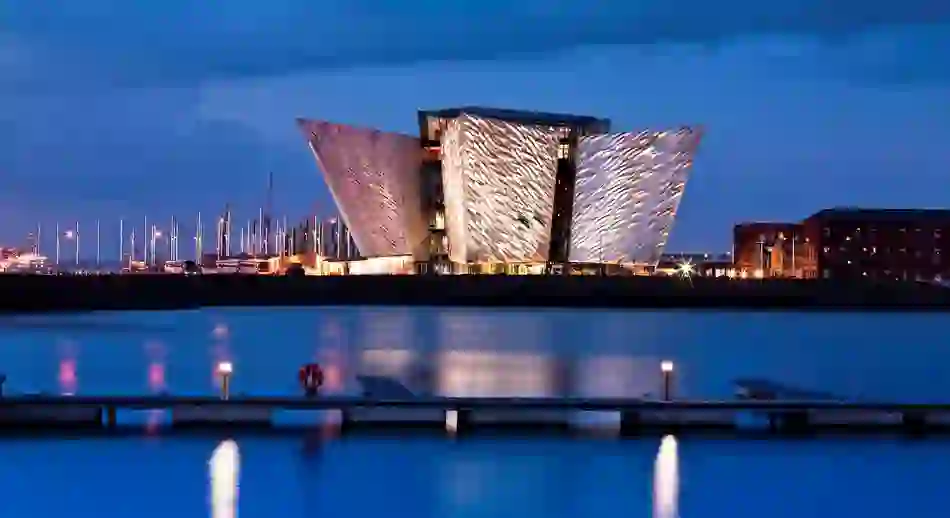


Titanic Belfast
Belfast, Titanic Town: builder of the Ship of Dreams. Take yourself down to the Edwardian-era Thompson Dry Dock where the past looms large.
There’s still a sense of those Belfast trades, those carpenters, fitters, plumbers and apprentices who made Titanic tick. Among them was the Guarantee Group, whose journey went from jubilation to disaster when they perished with the ship.
This is such a dramatic structure… there’s a whole other dimension that has to do with Belfast’s particular role
James Cameron, director of "Titanic"
Within sight of that dock is the vast shimmering shell that is Titanic Belfast. Nine galleries – tracing the ship’s story from creation to tragic sinking – tell the entire tale on an awesome scale. Expect gantry rides, an underwater cinema show and stunning cabin recreations.
Titanic Belfast
L-R: Titanic Belfast; Titanic Dock and Pump House; Titanic Quarter; aerial view of Titanic Dock with Belfast's docklands in the background


Afternoon tea at Titanic Belfast
If you plan to visit on a Sunday, finish your trip by booking Afternoon Tea beside a splendid replica of the famous Grand Staircase. It's a delicious experience complete with staff in period uniform, a menu inspired by the original voyage and a jazz band playing period tunes.
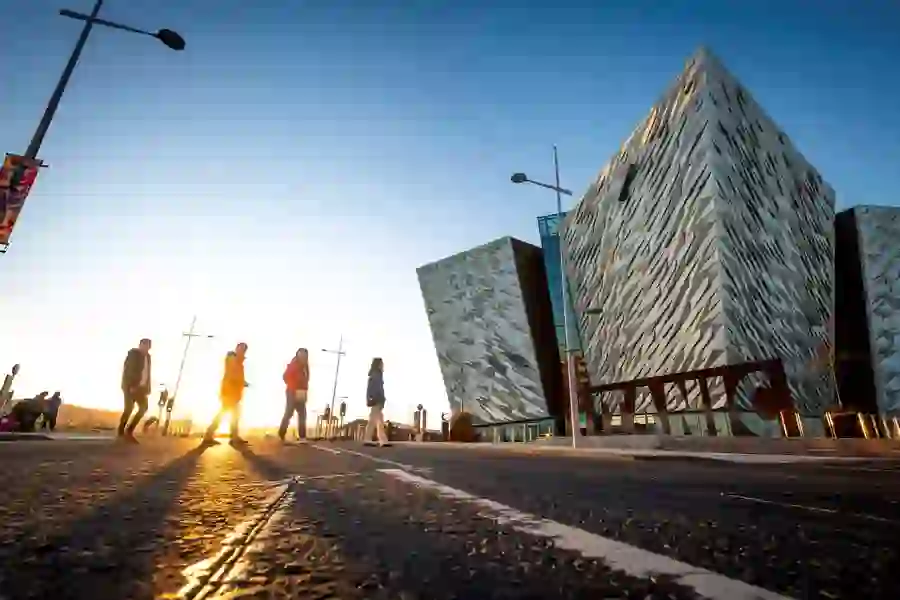

Titanic Belfast
You can visit the old drawing offices, where Titanic was transferred from dreams to paper – now in the reimagined Titanic Hotel Belfast. or board the White Star Line’s only remaining ship, the SS Nomadic at Hamilton Dock. Built as a tender to the ship of dreams, she is a modest echo of the Edwardian era when the White Star Line was a byword for quality and luxury.
Echoing this early 20th century maritime era is HMS Caroline, a World War 1 Light Battle Cruiser and the last surviving ship from the Battle of Jutland in 1916. Located in Belfast's Titanic Quarter, it has cabins recreated as if the crew were still on board, and a riveting experience led by a crew member is packed with stories from original diary entries and first-hand accounts.
Next to HMS Caroline is the Titanic Dock & Pumphouse. The scale of this dry dock that once housed this mammoth liner can only be really appreciated when you climb down to where it sat on the eve of her first and last voyage in 1912.
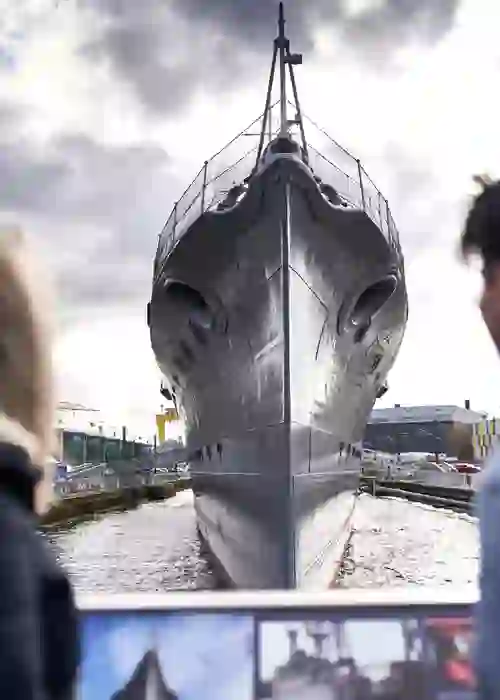

HMS Caroline, Titanic Quarter
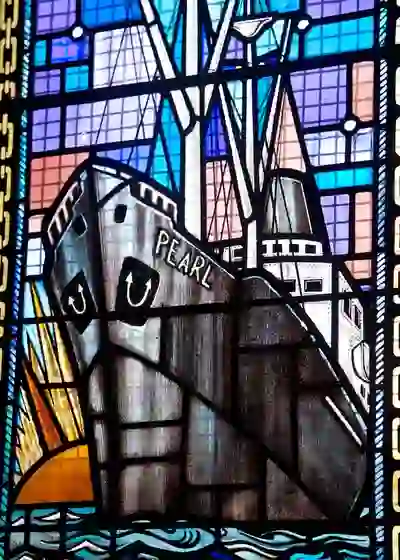

Stained glass window commemorating Titanic at Belfast City Hall
Does anyone know Titanic’s story more than those who live and breathe its hometown daily? We don't think so. Along with the insight of their ancestors who lived during and, even more importantly, after Titanic’s build, Titanic tour guides in Belfast are unrivalled in their connection to the ship. Titanic Walking Tours and Titanic Tours Belfast, run by Susie Millar – great granddaughter of a Titanic engineer who perished with the ship – are just a couple of options available. Or you can take a guided boat tour with the Lagan Boat Company, which tells the ever-changing story of Belfast's rich maritime heritage and industry.
She was all right when she left here
Overheard in Belfast...
The Ulster Folk and Transport Museum is home not only to a permanent Titanic exhibition – documenting the construction, voyage, and eventual sinking of the ship – the museum also digs right under the skin of Belfast’s transport boom. Turn back the clock to Edwardian Belfast and wander through 170 acres overlooking Belfast Lough, illustrating early 20th-century rural life.
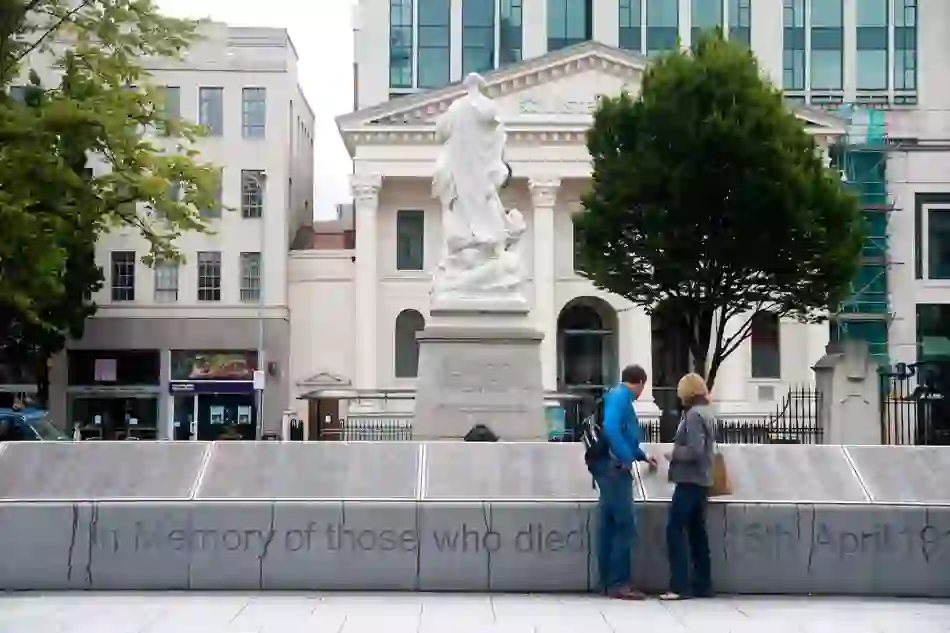

Titanic Memorial Garden, Belfast
The Titanic Memorial Garden commemorates the 1,512 people who perished on RMS Titanic in 1912. The garden's memorial plinth supports 15 bronze plaques which list, in alphabetical order, the names of 1,512 people who perished on RMS Titanic. The flowers in the garden where chosen to encourage a sense of contemplation and a feeling of relative peace and rest.
Titanic: eat, drink, stay
So unique is Robinson’s Titanic collection that visitors can stroll around the pub as if pottering through a museum. Among the stunning array are a Titanic steward’s badge, a commemorative jewellery box and Philomena – a doll reputedly rescued from Titanic’s floating wreckage.
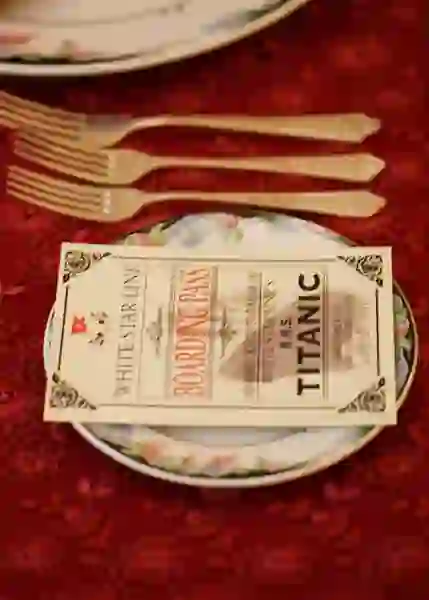

Rayanne House, Belfast